To guarantee the teaching quality of the Medical Language course for MBBS international students in the autumn semester of 2026 and strengthen faculty collaboration across hospitals, the teaching team for the Medical Language course of the Second Hospital of Jilin University held a collective lesson preparation meeting via Tencent Meeting on September 3rd. Senior experts were invited for guidance, and more than 20 backbone teachers from the First, Second and Third Hospitals of Jilin University attended the meeting. The meeting was presided over by Chen Peng, Director of the Clinical Foreign Language Teaching and Research Office of the Second Hospital of Jilin University and chief person in charge for the Medical Language course of the Medical Department.
In accordance with the syllabus requirements for Medical Language, Teacher Chen Peng gave an overall arrangement for the internal medicine related teaching tasks for the autumn semester. She stressed the integrated adoption of multiple teaching methods, the application of modern information technologies in teaching, and the reinforcement of formative assessment, so that international students can fully grasp the core essentials of clinical inquiry. Meanwhile, she called for closer inter hospital faculty collaboration, optimized classroom management, more focus on students’ actual learning outcomes, and continuous improvement of the overall teaching capacity of the course team.
Teacher Li Yangxue, secretary of the course team, gave a detailed introduction to teaching assignments, course arrangements and assessment methods, and interpreted the training program for international students in depth, laying a solid foundation for smooth teaching in the new semester.
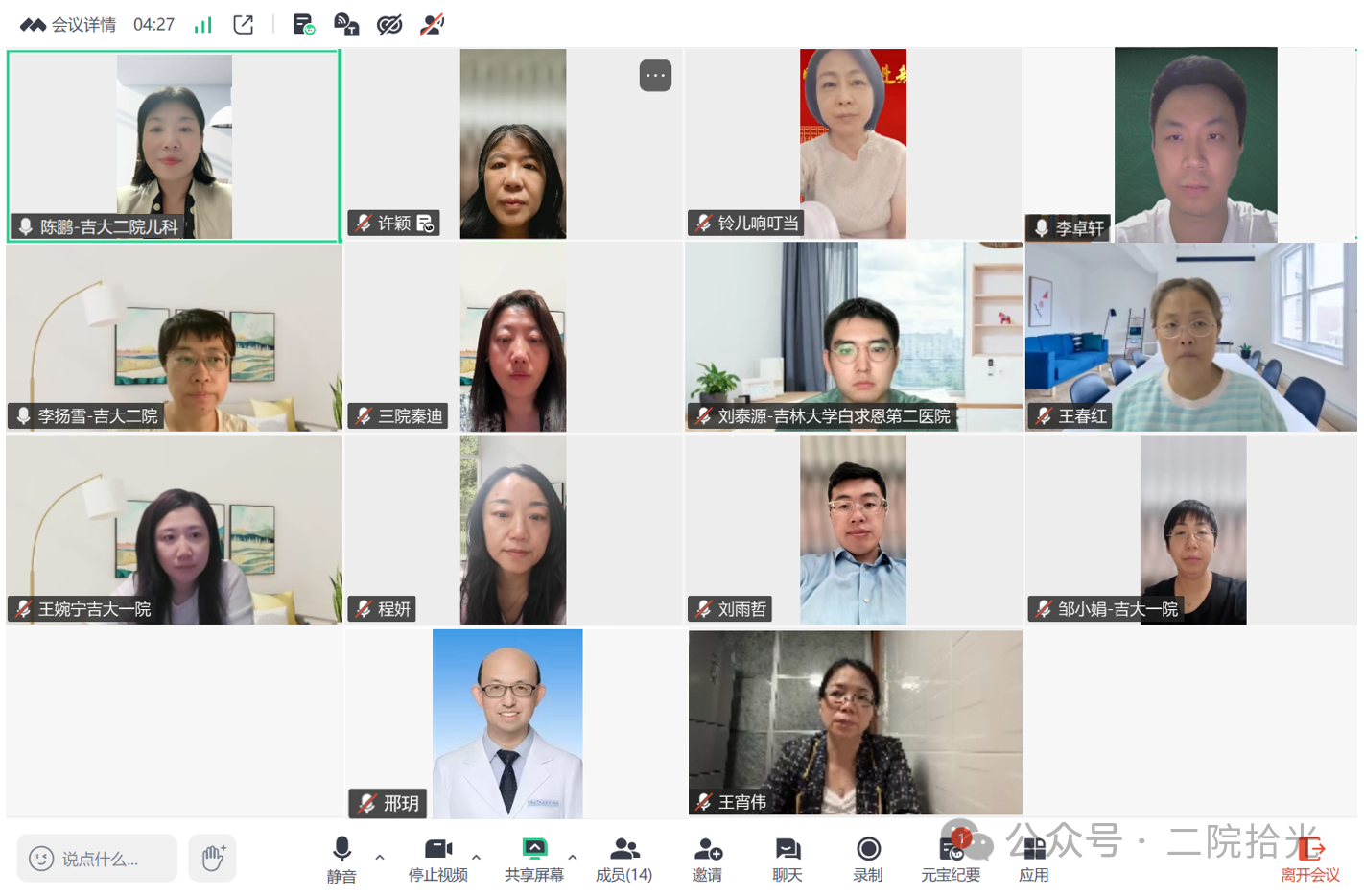
Teacher Wang Wanning, person in charge of the Medical Language course for international students at the First Hospital of Jilin University, shared her long-term teaching experience and proposed that each class should focus on professional vocabulary accumulation and conversational practice to help students master Chinese medical professional expressions. Teacher Wang Xiaowei, person in charge for the Medical Language course for international students at the Third Hospital of Jilin University, believed that teaching should be centered on students’ future practical communication with Chinese patients, with emphasis on the training of inquiry and communication skills.Teacher Xing Yue suggested tighter cooperation between the teaching team and the International Exchange School to strengthen attendance management. Teacher Wang Chunhong pointed out that Medical Language teaching should balance concise content and clinical thinking training, so as to gradually form a proper teaching rhythm suitable for international students. Teacher Cheng Yan shared her experience of stimulating students’ interest with typical clinical cases. Teacher Liu Yuzhe expressed willingness to take an active part in curriculum construction and hoped for smooth course implementation. Teacher Yu Ling proposed sorting out key and difficult points precisely to improve classroom efficiency. Teacher Qin Di suggested differentiated teaching according to international students’ prior knowledge and learning ability to realize individualized teaching.Teacher Li Zhuoxuan summarized the key points for test setting from previous semesters, helping teachers grasp assessment requirements accurately.
This meeting clarified the teaching objectives of the Medical Language course for the autumn semester of 2026,built a high-quality communication platform for teachers from different hospitals, and provided strong support for high-quality MBBS teaching.
In the future, the Second Hospital of Jilin University will further integrate cross-hospital teaching resources and promote faculty collaboration. Based on the training requirements of MBBS international students, the hospital will continuously polish course content, optimize teaching strategies, explore clinical teaching modes adapted to international students, push forward the construction and upgrading of core medical courses including Medical Language, improve the overall quality of international student medical education, and lay a solid groundwork for cultivating international-oriented medical talents with sound clinical competence and professional quality.