


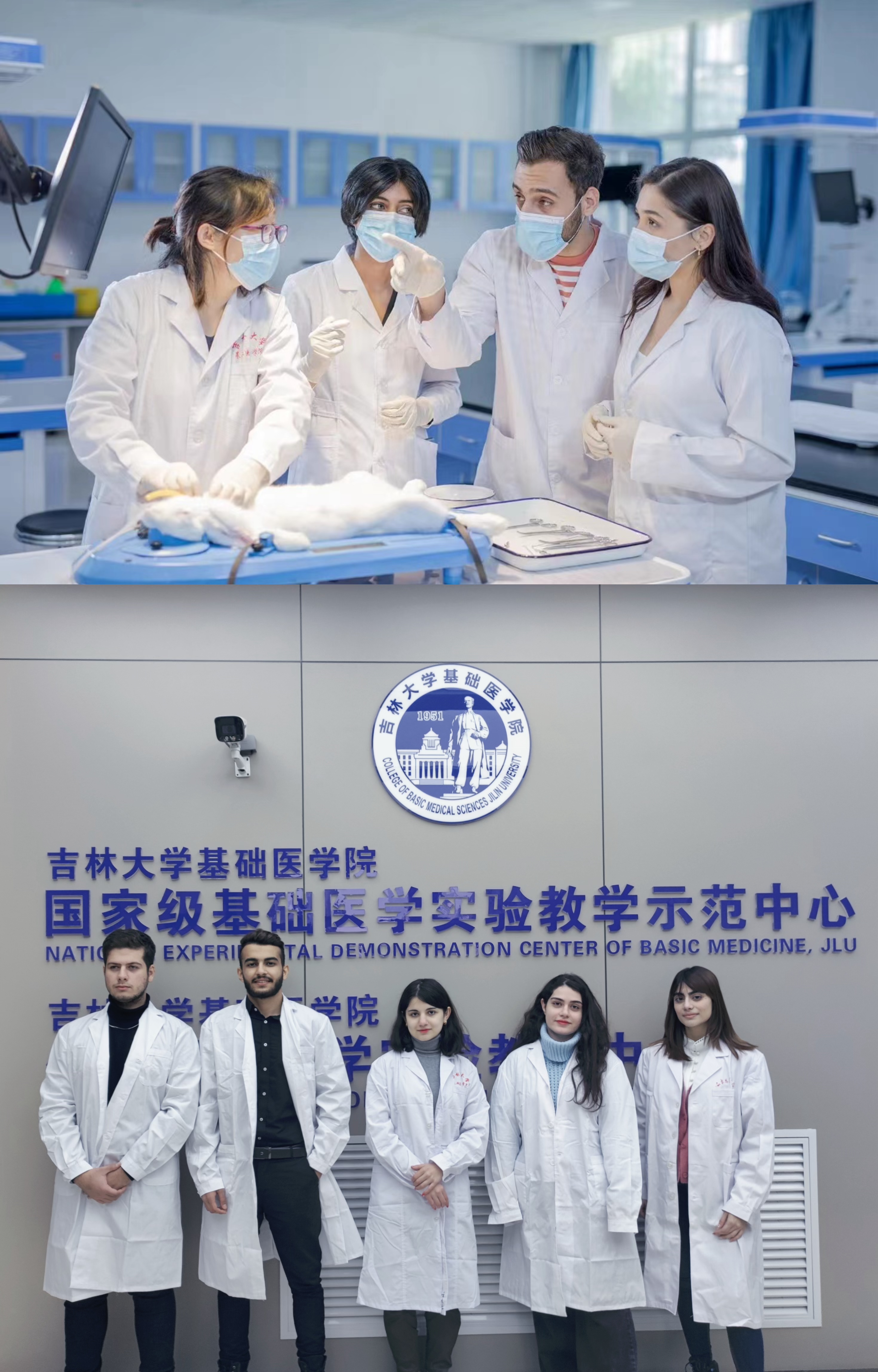
National Laboratory Teaching Center of Basic Medicine, Jilin University
Relying on the long-standing educational history and profound cultural heritage of Norman Bethune Medical College, Jilin University, the National Laboratory Teaching Center of Basic Medical Sciences coordinates theoretical and experimental teaching in accordance with the principle of “interdisciplinary integration and resource sharing”. Integrating education and teaching, scientific research training, and practical training, it has developed into a distinctive, pragmatic, innovative and pioneering experimental teaching platform.
The construction of the center was initiated in 1999. Initially, the experimental teaching sections originally belonging to the teaching and research departments of Physiology, Pathophysiology, and Pharmacology were integrated into the Functional Science Experimental Teaching Center. In 2001, the Laboratory Teaching Center of Basic Medicine, Jilin University was formally established. In 2008, it was approved by the Ministry of Education as a national experimental teaching demonstration center construction unit. In 2012, it passed the acceptance inspection by the Ministry of Education and was officially recognized as a “National Experimental Teaching Demonstration Center”. The center covers an area of 5,250 square meters and is equipped with 4,253 pieces/sets of teaching instruments and equipment. The center has established four experimental teaching functional platforms (for Function Science, Morphology, Biochemistry and Molecular Biology, and Pathogenic Immunology and Cytogenetics), as well as supporting platforms including an Animal Experiment Center Teaching Assistant Platform, an Open Experiment Platform, a Virtual Experimental Teaching System, and a Bioinformatics Platform. Additionally, it has newly added the Jilin Provincial Medical Laboratory Animal Talent Training Platform and the China Association for Laboratory Animal Sciences - Jilin Provincial Laboratory Animal Talent Continuing Education Base, providing a platform for cultivating the innovative thinking of medical undergraduates. Furthermore, relying on the Ministry of Education's Innovation Center for Basic Medical Research on Airway Diseases in Northern Cold Regions, 2 Ministry of Education Key Laboratories (for Pathological Biology and Zoonoses), the National Medical Products Administration Key Laboratory for Evaluation of Humanized Animal Models of Vaccines and Cell Therapy Products, and 25 key laboratories of Jilin Provincial Development and Reform Commission, Department of Science and Technology, and Health Commission, the university has established a cluster of advantageous disciplines. These platforms systematically and plannedly foster and guide the university's scientific research projects.

Address: No.126 Xinmin Street, Changchun, China Coptright © 2025 college of basic medical sciences Jilin University